

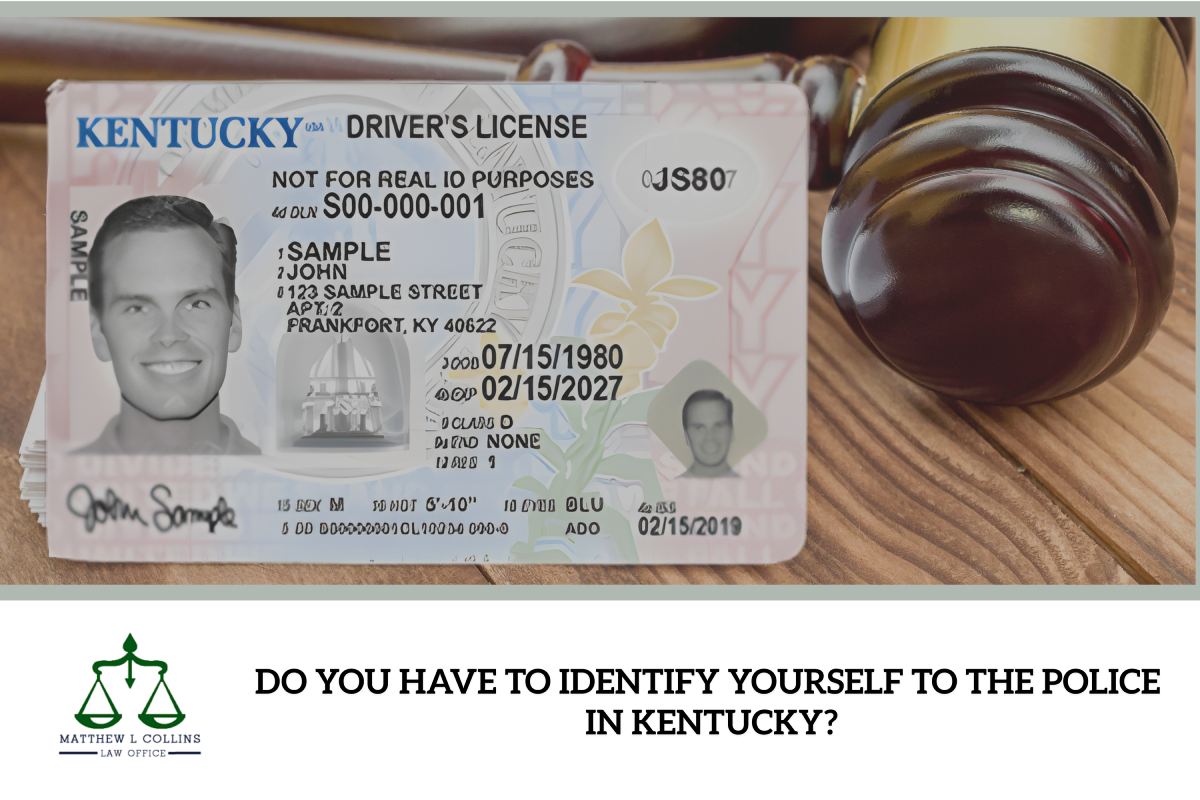
If a police officer stops you in Kentucky, do you have to tell them who you are?
It’s a simple question, but the answer depends on the situation. Many states are colloquially known as “stop and identify states,” and knowing your rights depending on where you are and where you plan to travel can make a significant difference in how your encounter with the police plays out.
Interactions with law enforcement can feel tense, even when you’ve done nothing wrong. Understanding what Kentucky law requires can help you stay calm and also legally protected.
Kentucky Is Not One of The “Stop and Identify” States
Some states have laws requiring a person to identify themselves to police during an encounter. These are known as “stop and identify” states. If you’re wondering: “Is Kentucky a stop and ID state?” know that it is not.
Kentucky law doesn’t go that far. There’s no general statute in the Kentucky Revised Statutes that forces someone to identify themselves just because an officer asks. That said, it doesn’t mean you can say nothing and walk away in every case.
In “stop and ID” states, if police lawfully detain you (meaning they have a reasonable suspicion you committed or are about to commit a crime), they can demand your name. Refusing to give it may lead to arrest. States with this policy include but are not limited to: Alabama, Arizona, Arkansas, Colorado, Florida, Georgia, Illinois, Indiana, Kansas, Louisiana, Montana, Nebraska, Nevada, New Hampshire, New Mexico, New York, North Dakota, Ohio, Rhode Island, Utah, Vermont, and Wisconsin.
When You Do Have to Identify Yourself in Kentucky
There are certain times when you must provide identification or tell an officer who you are:
- When you’re driving: If you’re pulled over, you must show your driver’s license, registration, and proof of insurance. That’s required by traffic law.
- If you’re lawfully arrested: Once you’re under arrest, refusing to identify yourself could complicate your situation or delay processing.
- When specific laws require it: Special situations, such as hunting or possessing a concealed weapon, may come with on-the-spot ID requirements.
Outside those conditions, you generally have the right to remain silent. Kentucky officers can ask for your name, but you don’t have to answer unless the exceptions mentioned above apply.
Define Detention vs. Arrest
Sometimes, an officer will say you’re not under arrest but are being “detained.” That means they believe they have reasonable suspicion to temporarily stop you. During a detention, you’re not free to leave, but you still don’t have to give your name unless one of those specific laws applies.
If you’re unsure whether you can walk away, you can respectfully ask: “Am I free to go?” If the officer says “yes,” calmly leave. If the officer says “no,” then you’re being detained. Keep calm, don’t argue, and stop talking until you have an attorney.
Talking Isn’t Always the Best Option
If you’re detained by the police, you have the right to remain silent and you have the right to speak to a lawyer. Even innocent answers can be misunderstood or used against you later. That’s why defense attorneys often remind people to stay calm, be polite, and say something simple like, “I choose to remain silent,” or “I’d like to speak with a lawyer.”
Silence is a right protected under the Fifth Amendment and Kentucky law. On the other hand, lying to a police officer is a crime. Criminal charges can bring serious consequences, even for minor misunderstandings. Having an experienced lawyer by your side can help protect your rights and guide you through every step.
See Why We’re A Leading Defense Attorney near Lawrenceburg, KY
At the Matthew L. Collins Law Office, we help people in Lawrenceburg and across Central Kentucky. We can help with all types of cases and have experience with identity theft, civil litigation, personal injury, criminal defense, family law, and real estate law. Schedule a free consultation today or give us a call at (502) 839-5163.
When your rights are at stake, knowing what to say and what not to say can make all the difference. We’ll leverage our expertise to work with you and provide personalized legal guidance through the process, and counsel based on what is best for you.